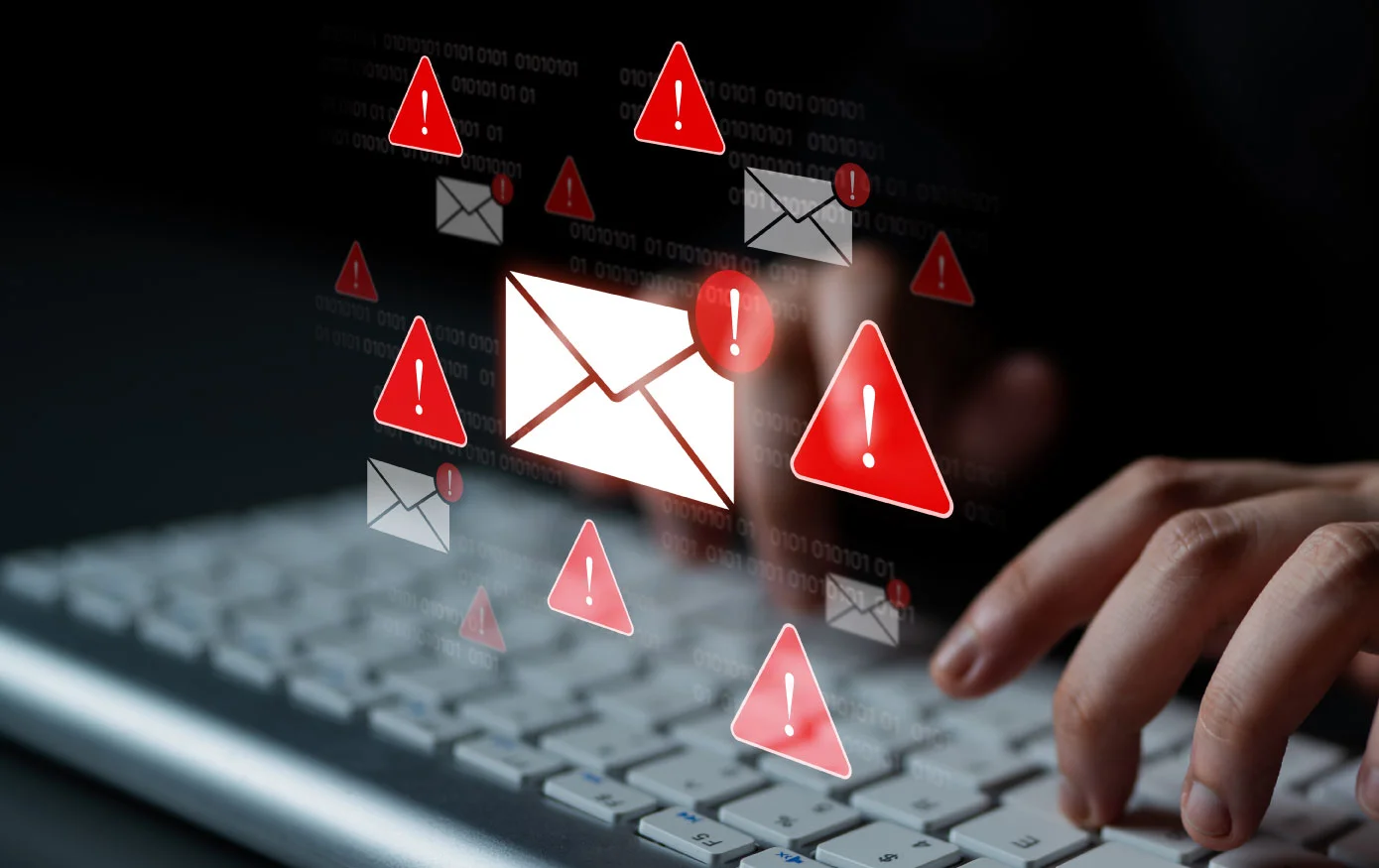
Email security failures continue to expose healthcare organizations to breaches and regulatory exposure, with research identifying authentication gaps, encryption weaknesses, and credential theft as contributing factors in healthcare email incidents heading into 2026.
Email Remains a Primary Breach Vector in Healthcare
Email remains a frequent entry point in healthcare breach incidents based on analysis of reported events involving healthcare organizations. A review of breach reports identified 180 healthcare organizations that experienced email related breaches in 2024.

The analysis links many email breaches to weak security configurations, inadequate authentication controls, and user actions that allow attackers to gain access to email accounts or sensitive communications. These conditions remain present even when organizations deploy cybersecurity technologies.
Only 1.1 percent of healthcare organizations evaluated in the research demonstrated a low risk email security posture. The findings indicate that most organizations operate email environments that present elevated exposure to security incidents.
Authentication Failures in Breached Healthcare Domains
Authentication weaknesses appeared in a large portion of organizations that experienced email breaches. An analysis of 170 email related breach incidents reported to the United States Department of Health and Human Services Office for Civil Rights during 2025 evaluated the authentication configuration of affected domains.
The evaluation examined several authentication technologies including Domain based Message Authentication Reporting and Conformance, Sender Policy Framework, and Mail Transfer Agent Strict Transport Security. These mechanisms validate sending servers and enforce encrypted communication between mail systems.
Nearly three quarters of the breached organizations did not have a functioning policy that blocks spoofed email messages from reaching employee inboxes. More than half of the organizations did not verify that incoming messages originated from authorized sending systems.
The configuration review placed 41 percent of breached organizations in the highest risk category based on authentication and encryption settings. The prior year recorded 31 percent of breached organizations in that category. None of the breached organizations in the dataset qualified for the lowest risk category for authentication and encryption configuration.
Additional analysis found that 74 percent of breached domains in 2025 had ineffective Domain based Message Authentication Reporting and Conformance protection. The percentage recorded in 2024 was 65 percent.
Credential Theft and Mailbox Takeovers
Credential theft was associated with the most damaging email breaches identified in the research. Breach analysis from 2025 found that stolen login credentials exposed more than 630,000 patient records.
Credential theft incidents represented approximately 17 percent of the email breaches examined in the dataset. Although the share of incidents was smaller than other attack patterns, the data exposure in these events was larger.
The research identified three dominant email attack patterns responsible for 170 breach incidents affecting approximately 2.5 million individuals during 2025.
In credential theft incidents, attackers obtain employee login credentials through phishing messages. Attackers then access employee mailboxes using those credentials and search stored messages for protected health information.
Mailbox takeover incidents provide access to historical email communications stored in employee accounts. Attackers may review messages and attachments containing patient information during the period of unauthorized access.
Underreporting of Email Security Incidents
Research examining internal reporting practices indicates that many email security incidents are not reported by employees. Only 5 percent of phishing attacks are reported by staff members within healthcare organizations.
Survey data from healthcare IT leaders shows that email security incidents occur across the sector. Sixty percent of surveyed healthcare organizations reported experiencing email related security incidents during the prior year that exposed patient data.
Despite the number of incidents, only 4 percent of known HIPAA related email violations are reported to security teams. Low reporting levels reduce visibility into active email threats within healthcare organizations.
Financial and Regulatory Exposure
Email security failures have also resulted in regulatory enforcement and financial penalties. Breach analysis identified HIPAA penalties exceeding 9 million dollars associated with email security failures. The research referenced a settlement involving Solara Medical Supplies totaling 9.76 million dollars connected to email security failures.
Email continues to support communication related to clinical activity, billing operations, and administrative coordination within healthcare organizations. Breach data shows that weaknesses in authentication controls, encryption behavior, and internal reporting practices allow email systems to remain a point of exposure for protected health information under the HIPAA Privacy Rule and the HIPAA Security Rule.
Image credit: InfiniteFlow, Adobestock